

本文单独整理第二次特检的完整范围,包括:
- Close-up Survey,近观检验;
- Thickness Measurement,测厚;
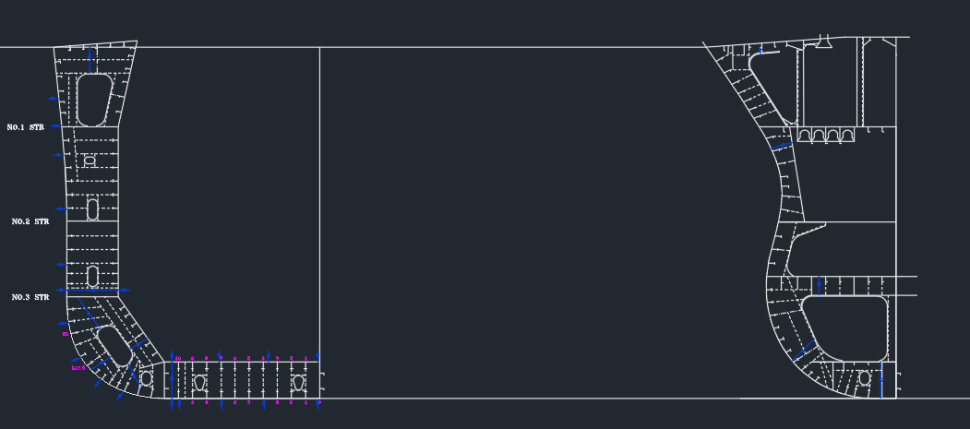
- 有条件适用的附加测厚;
- 发现腐蚀后的扩大测厚要求。
本文根据《BV Rules for the Classification of Steel Ships — NR467 Part A,July 2026》整理。
一、适用范围及规范依据
1. 适用范围
- 船级社:Bureau Veritas(BV)
- 船型:Single Skin Bulk Carrier(单壳散货船)
- 检验类型:Class Renewal Survey No.2
- 适用船龄:5<Age≤10 years
- 检验体系:ESP
- 规范版本:NR467 Part A,July 2026
2. 主要规范依据
- Pt A, Ch 3, Sec 3, Table 3:所有船舶通用测厚范围
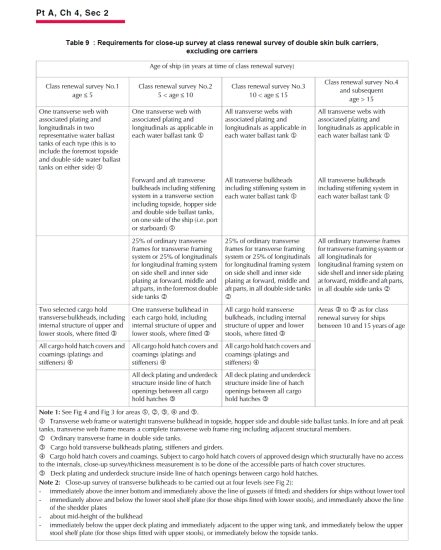
PDF第182页 - Pt A, Ch 4, Sec 2, Table 8:单壳散货船近观检验范围
PDF第234页
相关结构区域及横舱壁近观位置示意见PDF第235页(规范第233页) - Pt A, Ch 4, Sec 2, Table 11:散货船专用测厚范围
PDF第239~240页 - Pt A, Ch 2, App 3, Table 2及相关图示:测点数量和位置解释
PDF第132~141页 - Pt A, Ch 6, Sec 2, [5]及[5.3]:单壳散货船舷侧肋骨及肘板的追溯性附加要求
PDF第386~389页
其中,[5.3]测厚要求从PDF第387页开始。
Part 1 — English Version
1. Close-up Survey
1.1 Cargo Hold Shell Frames
For ships of less than 100,000 DWT:
All shell frames in the forward cargo hold and 25% of the shell frames in each of the remaining cargo holds are to be subject to close-up survey.
For ships of 100,000 DWT and above:
All shell frames in the forward cargo hold and 50% of the shell frames in each of the remaining cargo holds are to be subject to close-up survey.
The scope includes the upper and lower end attachments and the adjacent shell plating.
1.2 Transverse Webs in Water Ballast Tanks
One transverse web, together with its associated plating and longitudinals, is to be subject to close-up survey in each water ballast tank.
1.3 Transverse Bulkheads in Water Ballast Tanks
The forward and after transverse bulkheads, including their stiffening systems, are to be subject to close-up survey in one selected water ballast tank.
1.4 Cargo Hold Transverse Bulkheads
All cargo hold transverse bulkheads are to be subject to close-up survey.
1.5 Cargo Hold Hatch Covers and Coamings
All cargo hold hatch covers and hatch coamings are to be subject to close-up survey.
For hatch covers of an approved design without structural access to internal spaces, the survey and related thickness measurements are carried out on accessible parts.
1.6 Deck and Underdeck Structures Between Cargo Holds
All deck plating and underdeck structures inside the hatch-opening lines between cargo hold hatches are to be subject to close-up survey.
2. Thickness Measurement
2.1 Suspect Areas
All suspect areas throughout the vessel are to be measured.
2.2 Deck-plating Transverse Section Within Amidships 0.5L
One transverse section of deck plating is to be measured within amidships 0.5L, in way of a cargo space where applicable.
2.3 Deck Transverse Sections Outside Hatch Openings
Within the cargo length area, two transverse sections of deck plating outside the cargo-hatch opening lines are to be measured.
One section is to be located in the amidship area. The locations are generally selected where the greatest thickness reductions are suspected or indicated by deck-plating measurements.
The general transverse-section requirement and the bulk-carrier-specific deck-section requirement are to be coordinated in the approved thickness-measurement plan.
2.4 Structures Subject to Close-up Survey
Representative thickness measurements are to be taken on structural members subject to close-up survey, for general assessment and recording of the corrosion pattern.
2.5 Wind-and-water Strakes at Transverse Sections
Wind-and-water strakes in way of the required transverse sections are to be measured.
2.6 Wind-and-water Strakes Outside the Cargo Area
Selected wind-and-water strakes outside the cargo area are to be measured.
2.7 Additional Measurements of Side Shell Frames and Brackets
Where Ch 6, Sec 2, [5] applies, additional thickness measurements of side shell frames and their brackets are to be carried out in accordance with Ch 6, Sec 2, [5.3].
3. Possible Extension
The Surveyor may extend the close-up survey and thickness measurements where considered necessary.
Where substantial corrosion is found, the measurements are to be extended in accordance with the applicable tables and the approved survey programme.
第二部分——中文版
近观检验范围
1. 货舱舷侧肋骨
| 适用条件 | 近观检验范围 |
|---|---|
| DWT<100,000 | 最前部货舱全部舷侧肋骨;其余每个货舱25%的舷侧肋骨 |
| DWT≥100,000 | 最前部货舱全部舷侧肋骨;其余每个货舱50%的舷侧肋骨 |
近观范围包括:
- 舷侧肋骨本体;
- 肋骨上端连接;
- 肋骨下端连接;
- 相关肘板;
- 相邻舷侧外板。
25%的肋骨通常沿货舱长度均匀选择,可理解为左右舷分别每4根选择1根。
50%的肋骨通常可理解为左右舷分别每2根选择1根。
最终肋位清单应由BV批准或确认,不能只集中选择在舱口附近,也不能只选择船舶单侧。
2. 其他近观检验结构
| 结构项目 | 第二次特检最低范围 | 主要说明 |
| 压载舱横向强框 | 每个压载水舱1个 | 包括相关板材和纵向构件 |
| 压载舱横舱壁 | 选定1个压载舱的前、后横舱壁 | 包括舱壁扶强系统 |
| 货舱横舱壁 | 全部 | 按规范要求覆盖主要高度位置 |
| 货舱舱口盖及围板 | 全部 | 包括板材、扶强材及可接近结构 |
| 舱口间甲板及甲板下结构 | 全部 | 位于货舱舱口之间、舱口开口线以内 |
3. 压载舱横向强框
每个压载水舱应选择一个横向强框进行近观检验。
该范围不仅包括强框腹板和面板,还包括按结构形式适用的:
- 强框扶强材;
- 相邻甲板及纵骨;
- 船底板及纵骨;
- 舷侧外板及纵骨;
- 斜板结构;
- 顶边舱或底边舱结构;
- 相关纵舱壁板及纵骨。
具体范围和测点应按船舶结构形式及BV适用图示确定。
4. 压载舱横舱壁
在一个选定的压载水舱内,对前、后横舱壁进行近观检验,包括舱壁板及扶强系统。
这里是“选定一个压载舱”,不是每个压载舱的全部横舱壁。
压载舱的选择应结合:
- 涂层状况;
- 压载舱使用情况;
- 历史测厚记录;
- 总体检验发现;
- 船检认为腐蚀风险较高的位置。
5. 货舱横舱壁
所有货舱横舱壁均应进行近观检验。
对于常见的槽形横舱壁,近观通常覆盖以下四个高度位置:
- 内底板上方;
- 下墩顶板上、下方,或相应加强结构位置;
- 舱壁中部高度;
- 上甲板、顶边舱或上墩附近。
设有上下墩时,还应包括墩内板材、扶强材和相关连接结构。
6. 舱口盖及舱口围板
所有货舱舱口盖及舱口围板均应进行近观检验。
范围通常包括:
- 舱口盖板;
- 舱口盖内部扶强结构;
- 舱口围板;
- 围板面板;
- 围板扶强材及肘板;
- 相关连接部位。
对于经过认可、内部没有结构通道的舱口盖,只对能够接近的结构进行近观检验和相关测厚。
7. 舱口之间的甲板及甲板下结构
所有货舱舱口之间、舱口开口线以内的甲板板和甲板下结构均应进行近观检验。
主要包括:
- Cross-deck plating,舱口间甲板板;
- Underdeck structures,甲板下结构;
- 甲板纵骨;
- 甲板横梁;
- 短纵桁及相关连接构件。
CSR与非CSR船舶的具体测点模式可能不同,应按适用图示和批准的测厚计划执行。
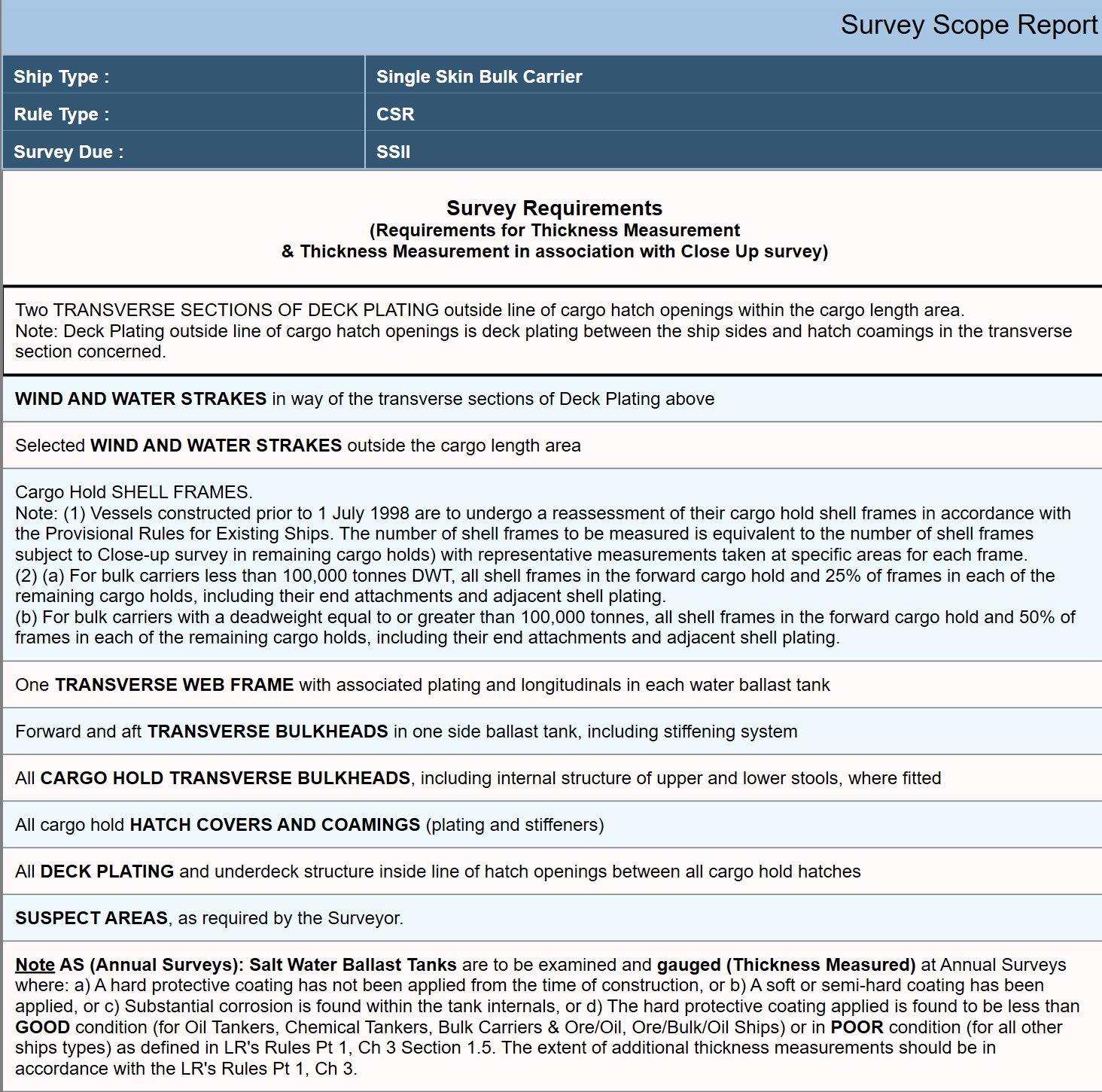
测厚范围
| 测厚项目 | 第二次特检最低范围 | 主要说明 |
| 可疑区域 | 全船所有可疑区域 | 不受基本测点数量限制 |
| 通用甲板板横剖面 | 船中0.5L范围内1个 | 尽可能位于货物处所 |
| 散货船专用甲板横剖面 | 货舱区域内2个 | 位于舱口开口线以外 |
| 近观检验结构 | 代表性测厚 | 用于总体评估和记录腐蚀分布 |
| 横剖面处风雨带列板 | 横剖面位置 | 与横剖面测量同步进行 |
| 货舱区域外风雨带列板 | 选定部分 | 按Selected plates原则布点 |
| 舷侧肋骨及肘板 | 有条件适用 | 适用Ch 6相关条款时增加 |
1. 可疑区域
所有可疑区域均应进行测厚。
可疑区域通常包括:
- 明显锈蚀或减薄区域;
- 涂层失效区域;
- 积水、积泥位置;
- 点蚀或沟槽腐蚀区域;
- 以前进行过修理的区域;
- 历史记录显示存在持续腐蚀的位置;
- 总体检验或近观检验发现异常的位置。
可疑区域测厚不受基本范围限制,船检可以根据现场情况扩大测量。
2. 横剖面要求
第二次特检的横剖面要求来自两个不同表格。
通用要求
在船中0.5L范围内测量一个甲板板横剖面,并在适用时尽可能布置在货物处所位置。
散货船专用要求
在货舱区域长度范围内,对舱口开口线以外的甲板板测量两个横剖面。
两个甲板横剖面应注意:
- 其中一个位于船中区域;
- 原则上选择预计减薄最严重的位置;
- 也可根据甲板板初步测量结果确定;
- 测量范围为舷侧至舱口围板之间的甲板板。
这两项要求不能分别孤立理解。
制定测厚计划时,可以将两个散货船专用甲板横剖面中的一个安排在船中0.5L范围内,使其同时满足通用要求。
最终横剖面肋位应由BV批准或指定。
3. 甲板横剖面的测点
对于舱口开口线以外的甲板横剖面,在相关剖面内,舷侧外板至舱口围板之间的每块甲板板通常测量2个单点。
测点可布置在:
- 板长约1/4位置;
- 能够代表平均腐蚀的位置;
- 船检指定的腐蚀位置。
具体点位仍应以Ch 2, App 3及批准的测厚计划为准。
4. 近观结构的相关测厚
Table 11要求对Table 8规定的近观结构进行代表性测厚,用于:
- 评估结构总体状况;
- 记录腐蚀分布;
- 判断是否存在局部或普遍减薄;
- 确定是否需要扩大测厚。
第二次特检涉及的主要结构包括:
- 货舱舷侧肋骨及上下端连接;
- 压载舱横向强框;
- 选定压载舱的前、后横舱壁;
- 全部货舱横舱壁;
- 全部货舱舱口盖及舱口围板;
- 舱口之间的甲板板及甲板下结构。
需要注意:
近观检验范围不等于每个构件都必须按照相同数量进行全部测厚。
实际测点数量应按照BV测点模式、批准计划和现场船检要求确定。
5. 风雨带列板
第二次特检应测量:
- 横剖面位置处的风雨带列板;
- 货舱区域以外选定的风雨带列板。
“Selected plates”通常可理解为每3块板选择1块,并在能够代表平均腐蚀的位置至少测量1点。
如果船检发现局部腐蚀,也可以进一步指定板角、焊缝附近或明显腐蚀位置。
三、第二次特检的整理重点
BV单壳散货船第二次特检可以概括为:
近观检验
- 最前部货舱舷侧肋骨100%;
- 其余货舱根据DWT确定25%或50%;
- 每个压载舱1个横向强框;
- 选定1个压载舱的前、后横舱壁;
- 全部货舱横舱壁;
- 全部货舱舱口盖及舱口围板;
- 全部舱口间甲板及甲板下结构。
测厚
- 全船所有可疑区域;
- 船中0.5L内1个通用甲板板横剖面;
- 货舱区域内2个舱口线外甲板横剖面;
- Table 8近观结构的代表性测厚;
- 横剖面位置处的风雨带列板;
- 货舱区域以外选定的风雨带列板;
- 适用时增加舷侧肋骨及肘板附加测厚。
实际确定测厚范围时,最重要的是先确认船舶DWT,并协调通用横剖面与散货船专用甲板横剖面的位置。
第二次特检虽然没有第三次和第四次的系统测厚范围大,但已经涉及大量货舱、压载舱及甲板结构。
制定测厚计划时,应依次确认:
- 船舶是否属于单壳散货船及ESP船舶;
- 船龄是否处于第二次特检范围;
- DWT是否达到100,000;
- Table 8近观检验结构;
- Table 11散货船专用测厚范围;
- Ch 3通用横剖面要求;
- Ch 6附加测厚条款是否适用;
- BV批准的FR位置和最终测点。
规范规定的是最低范围。船舶实际状态、涂层状况、历史记录及现场检查结果不同,最终测厚范围可能进一步扩大。











暂无评论内容